How to angle a LEGO building kit model on a display stand
Three things decide whether a finished LEGO building kit model looks mounted or propped on a display stand: the angle, the footprint of the base, and where the stand grips the hull.
Start with the angle, not the stand
A hull looks fastest between twenty and forty degrees off level. Below that it reads as parked; above it, gravity starts pulling the nose and the whole build looks like it is about to come down. Our vertical brackets sit near the top of that range because the Millennium Falcon is a disc — it needs to be nearly upright before the profile is readable at all.
Put the weight under the nose
The common failure is a base that is long enough front-to-back but light. A stand creeps: it does not tip over, it walks forward a millimetre a week until the model overhangs. Weighted plates in the base and a footprint that extends past the heaviest point of the hull fix it. On our 75192 bracket the base runs 11.8 inches, which is longer than it looks necessary and exactly as long as it needs to be.
Grip existing plating, never the surface
A clamp that pinches an outer panel will bow it. Every mount we build clips into studs or plating the set already has underneath, so the load path runs through the model's own frame. It also means a ship lifts off in one movement when it is time to dust the shelf.
What to look for in LEGO display stands for a finished building kit
Most LEGO display stands on the market are a clear acrylic plate with a chrome post, and for a small fighter that is enough. A UCS hull is a different load: it wants a specific bracket, designed for one set, with the mass sitting under the heaviest point. Acrylic display cases are the other half of the shelf — cases protect a build from dust, they do not showcase it, and they hold the model flat in whatever position it was put down in.
Star Wars ships are what most of these mounts get built for, though the rules hold for anything with a nose. LEGO Technic models are the exception: a Technic chassis reads better left level, where the gears are visible. Collectors with a wide collection mix angled stands and premium cases on the same shelf, and the fans who send photographs to the yard usually keep their LEGO sets grouped by line, with one built model standing proud in the middle.
Check these before you mount a heavy hull
- Is the shelf itself level? A two-degree lean in the furniture becomes a visible lean in the model.
- Is the hull fully seated, with no bag of loose bricks left inside?
- Can you reach the model with both hands from where it will live? Mounting a Falcon one-handed at arm's length is how panels get snapped.
The brackets this entry was written around

Mast Mounts
Vertical Display Bracket for LEGO 75192 Millennium Falcon
4.4 1,765 builder notes
$39.98
Mast Mounts
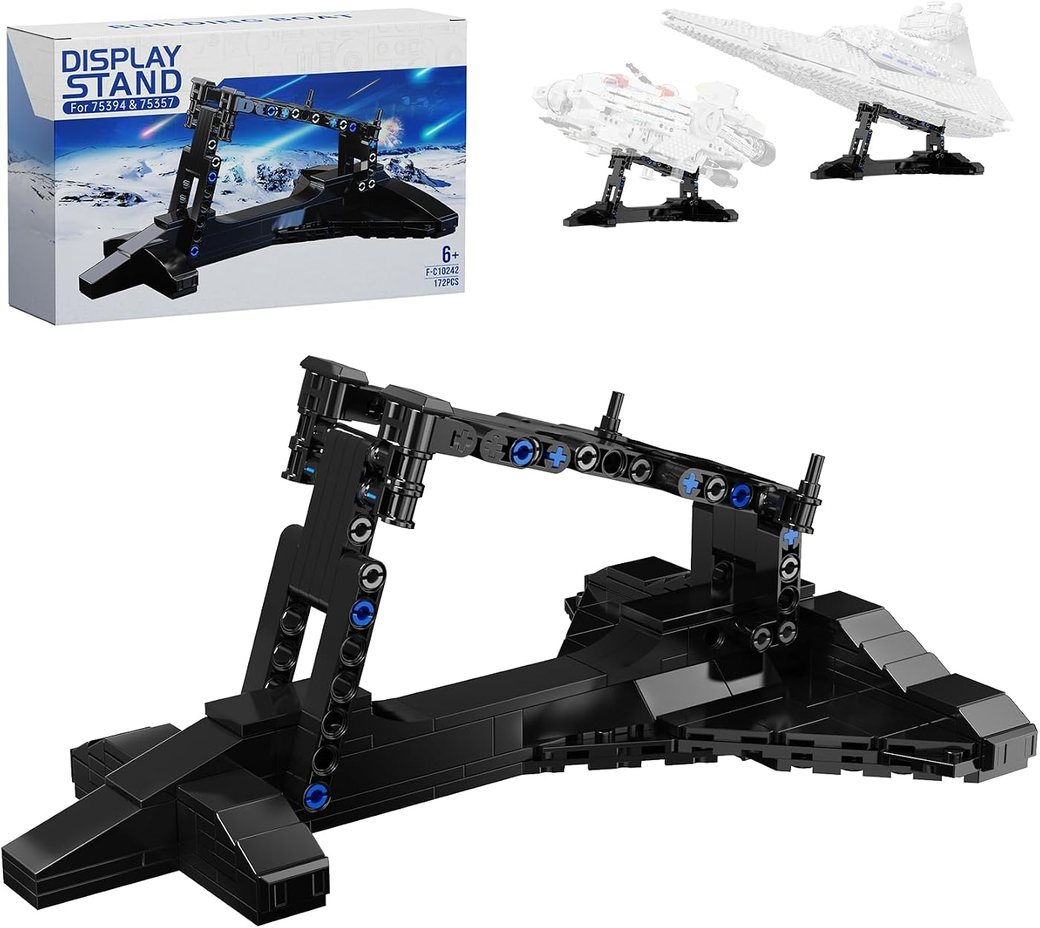
Imperial Aircraft Stand for LEGO 75394 and 75357
4.5 147 builder notes
$15.33
Mast Mounts
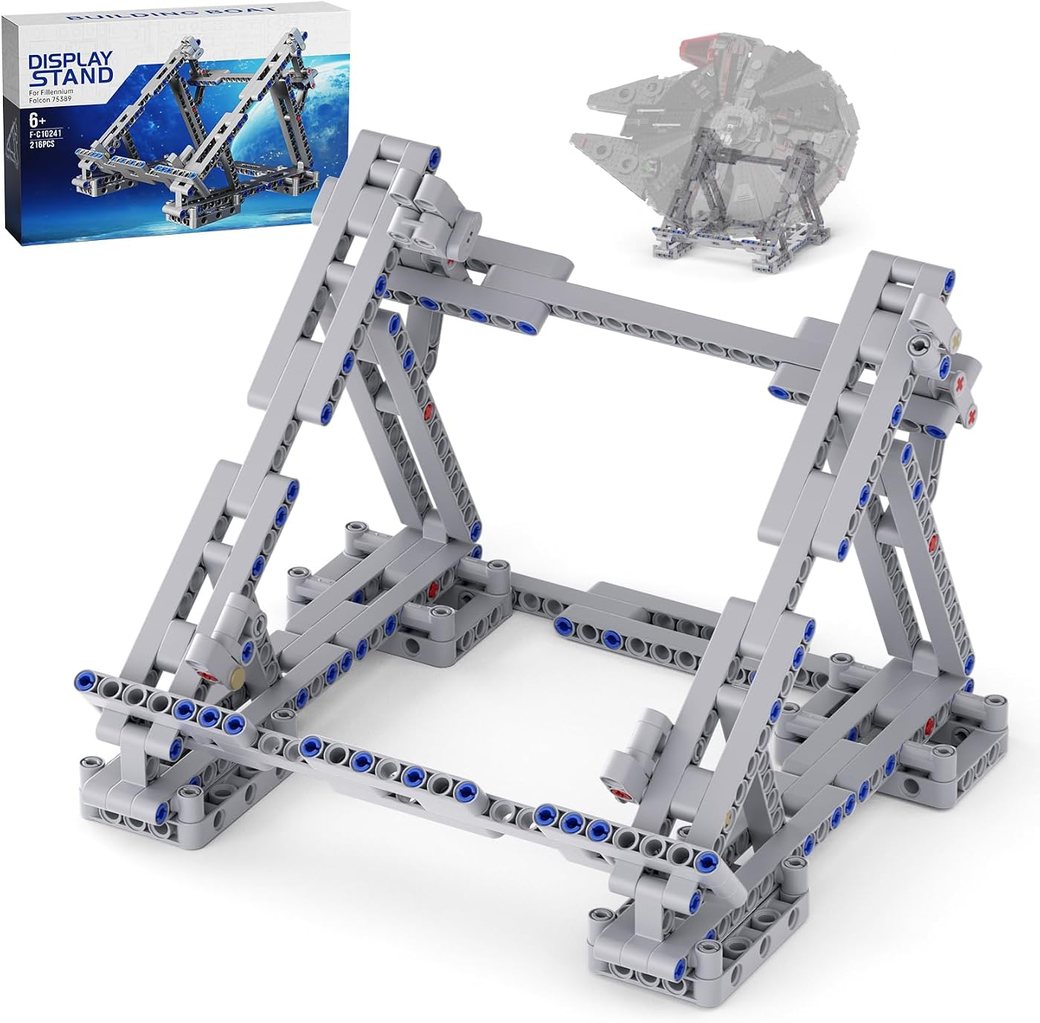
Vertical Falcon Bracket for LEGO 75389
4.4 90 builder notes
$14.56
Everything in the yard is on the Mast Mounts, Lantern Deck and Slipway shelves.